

 By
By I used to avoid vegan gravy.
Not because I didn’t need it.
Because it was always disappointing.
Too thin.
Too salty.
Or packed with random ingredients trying to fake richness.
Some tasted like soy sauce water. Others leaned so hard on mushrooms that everything else disappeared. And a few were just flour paste with color.
The problem was never the lack of meat.
The problem was lack of structure.
Good gravy is not complicated. It is fat, flour, and liquid, built slowly and seasoned properly. It should be smooth, pourable, and deeply savory without being heavy.
Most vegan gravy recipes skip the fundamentals and try to jump straight to flavor.
That is why they fail.
This one doesn’t.
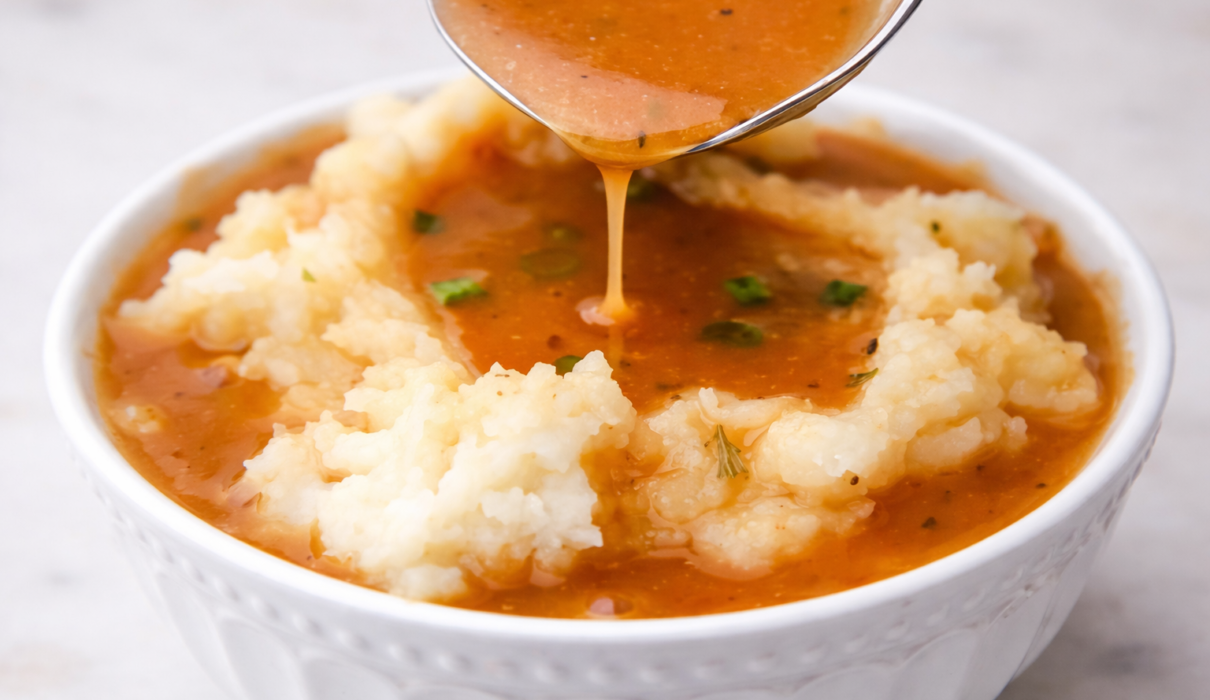
This vegan gravy recipe builds flavor step by step. It thickens properly, pours cleanly, and tastes balanced instead of aggressive.
It does what gravy is supposed to do.
What This Gravy Actually Is
At its core, gravy is a roux plus liquid.
- Fat and flour create the base.
- Liquid builds the body.
- Seasoning defines the flavor.
In traditional gravy, meat drippings carry most of the depth.
In a good vegan gravy recipe, that depth comes from browning, aromatics, and controlled seasoning.
- Onion adds sweetness.
- Garlic adds base flavor.
- Soy sauce adds umami.
- Broth ties everything together.
When built correctly, the result is smooth and cohesive, not thin or muddy.
Ingredients (Serves 3 to 4)
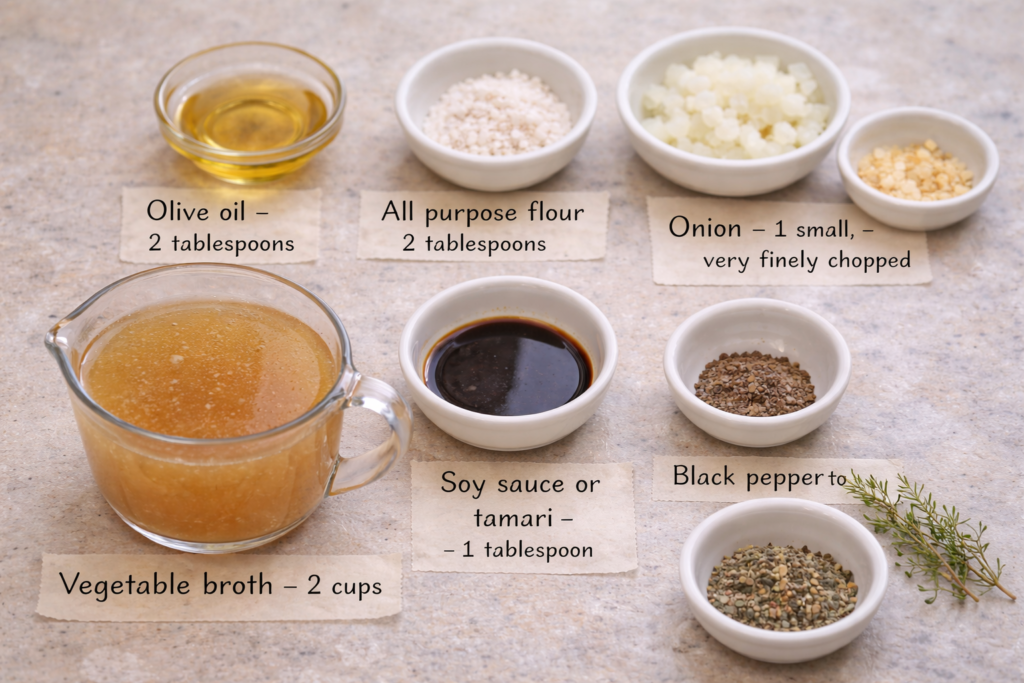
- Olive oil, 2 tablespoons
- All purpose flour, 2 tablespoons
- Onion, 1 small, very finely chopped
- Garlic, 3 cloves, minced
- Vegetable broth, 2 cups
- Soy sauce or tamari, 1 tablespoon
- Salt, to taste
- Black pepper
- A pinch of thyme or rosemary, optional
Optional for deeper color
A small splash of balsamic vinegar
Simple ingredients.
Technique matters more.
How To Make It
Heat olive oil in a pan over medium heat.
Add onion and cook slowly until soft and lightly golden. This step builds the base flavor. Do not rush it.
Add garlic and cook for about 30 seconds.
Add flour and stir continuously to form a paste. Cook for 1 to 2 minutes until the raw flour smell disappears. It should look slightly golden.
Slowly add vegetable broth while whisking constantly. Start with a small amount to keep it smooth, then add the rest.
Bring to a gentle simmer and keep stirring. Within a few minutes, the gravy will thicken.
Add soy sauce, salt, pepper, and herbs if using.
Simmer for another minute until smooth and glossy.
If you want a smoother texture, you can blend it briefly, but it is not required.
Texture Control
Too thin. Simmer longer to reduce.
Too thick. Add warm broth and whisk.
Lumpy. It needed more whisking when adding liquid.
Good vegan gravy should pour easily but still coat the back of a spoon.
Common Mistakes
- Adding all liquid at once
- Not cooking the flour properly
- Over salting before reduction
- Skipping browning of onions
Most weak vegan gravy recipes taste flat because they skip the base flavor.
That first step matters.
How I Actually Use It
- Over mashed potatoes
- With roasted vegetables
- On vegan meatloaf or cutlets
- With rice or simple grain bowls
It is a finishing element, not the main dish.
But it changes everything.
Storage
Refrigerate in an airtight container for up to 3 days.
It will thicken when cold.
Reheat gently with a splash of water or broth, whisking until smooth.
Final Thought
A good vegan gravy recipe is not about imitation.
It is about understanding how flavor builds.
- Brown your base.
- Control your thickness.
- Season at the end.
Do that and you get gravy that feels complete, not like an afterthought.
If you want a mushroom based version, onion free version, or a richer holiday style gravy, tell me and I will write it next.