

 By
By I used to avoid vegan pad thai.
Not because I didn’t like it.
Because it rarely felt right.
Too sweet.
Too oily.
Or noodles clumped together in a heavy sauce that tasted nothing like real pad thai.
Some versions skipped tamarind completely. Others overloaded peanut butter and turned it into something closer to noodles with sauce than actual pad thai.
The problem was never that it was vegan.
The problem was balance.
Good pad thai is not complicated. It is a balance of sour, salty, and sweet. The noodles should be coated, not drowned. The sauce should cling lightly and taste sharp, not sugary.
Most vegan pad thai recipes miss that.
This one doesn’t.
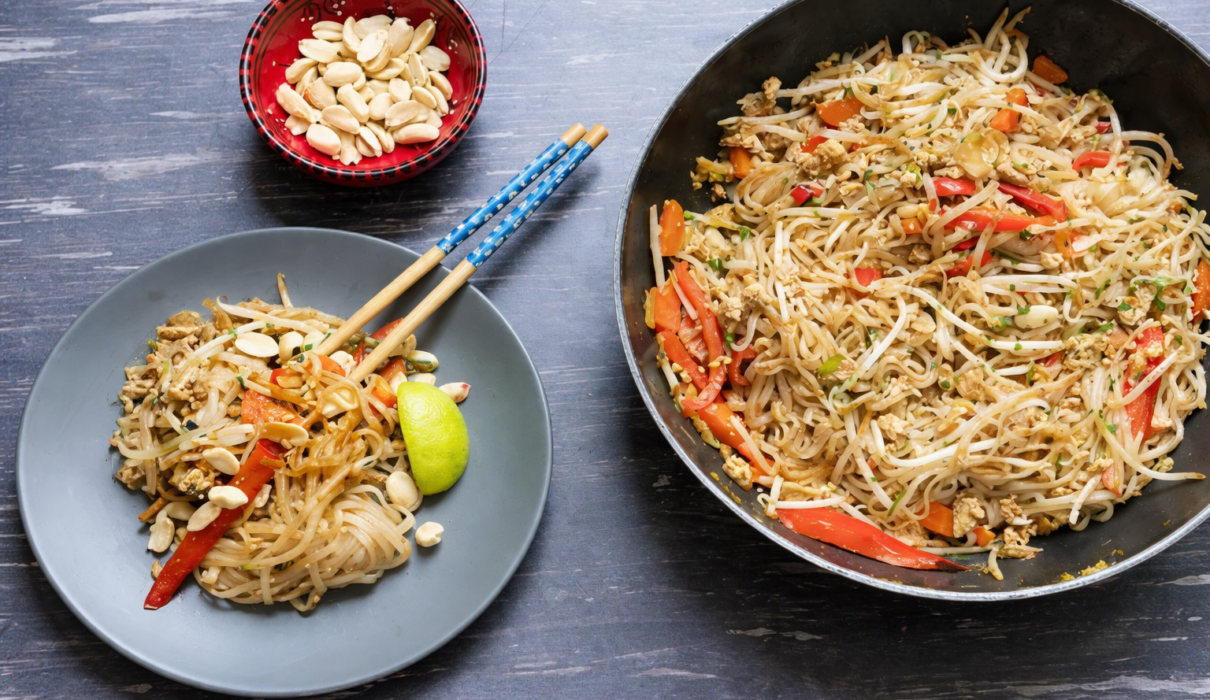
This vegan pad thai recipe is clean, balanced, and structured. The noodles stay separate, the sauce coats evenly, and the flavors stay sharp without becoming heavy.
No shortcuts.
No guesswork.
What This Dish Actually Is
Pad thai is built on contrast.
- Rice noodles for base.
- Sauce for balance.
- Heat for quick cooking.
- Fresh elements for finish.
In traditional versions, fish sauce and eggs add depth.
In a good vegan pad thai recipe, that depth comes from soy sauce, tamarind, and proper seasoning.
Tamarind brings sourness.
Sugar balances it.
Soy sauce adds salt and umami.
When these are balanced, the dish feels complete.
Ingredients (Serves 2)
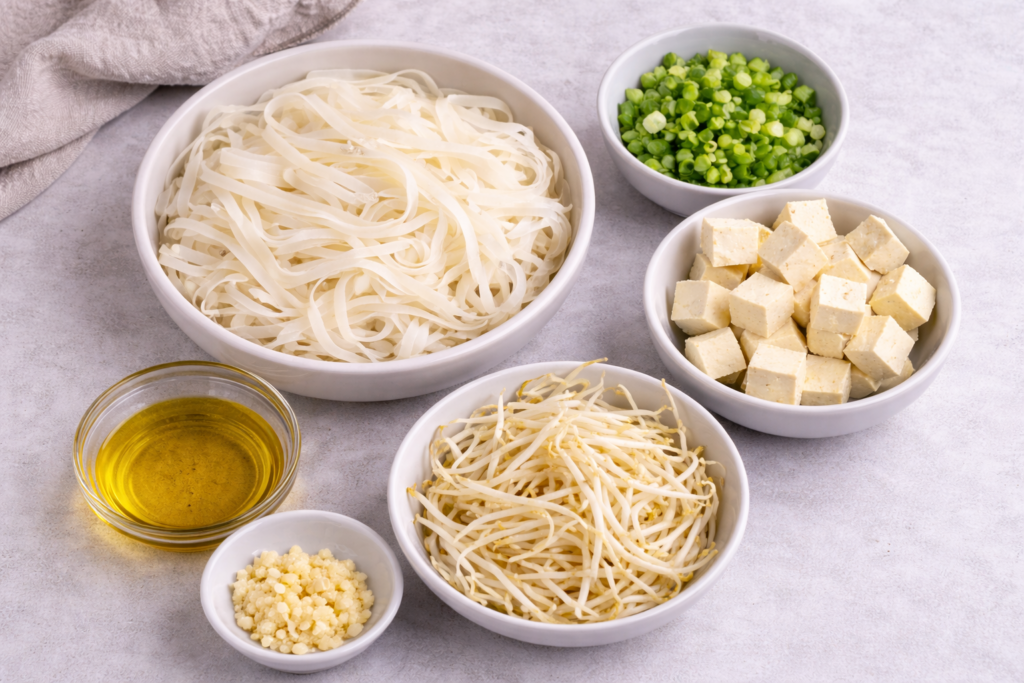
- Flat rice noodles, 200 grams
- Oil, 2 tablespoons
- Garlic, 3 cloves, minced
- Firm tofu, 200 grams, cubed
- Bean sprouts, 1 cup
- Spring onions, chopped
For the sauce
- Tamarind paste, 2 tablespoons
- Soy sauce, 2 tablespoons
- Sugar, 1 to 2 tablespoons
- Water, 2 tablespoons
For garnish
- Crushed peanuts
- Lime wedges
- Chili flakes
Keep the sauce simple.
That is where most vegan pad thai recipes go wrong.
How To Make It
Soak rice noodles in warm water until softened but not mushy. Drain and set aside.
Heat oil in a pan over medium high heat.
Add tofu and cook until lightly golden. Remove and set aside.
In the same pan, add garlic and cook briefly until fragrant.
Add softened noodles and pour in the sauce.
Toss quickly so the noodles absorb the sauce.
Add tofu back along with bean sprouts and spring onions.
Cook for another minute, tossing continuously.
Remove from heat.
Serve immediately with peanuts, lime, and chili flakes.
Texture Control
Noodles sticking. Too much sauce or overcooking.
Too dry. Add a small splash of water while tossing.
Too soft. Noodles were over soaked.
Good vegan pad thai should have separate, coated noodles.
Flavor Balance
Too sweet. Add more tamarind or lime.
Too sour. Add a little sugar.
Too salty. Dilute with a splash of water.
Most weak vegan pad thai recipes fail because they ignore balance.
Each element matters.
Common Mistakes
- Over soaking noodles
- Cooking too long
- Skipping tamarind
- Adding too much sauce
Pad thai is fast cooking.
Delay ruins texture.
Storage
Best eaten fresh.
Can be refrigerated for up to 1 day.
Reheat quickly in a pan with a splash of water.
Final Thought
A good vegan pad thai recipe is not about replacing ingredients.
It is about respecting balance.
Sour, sweet, salty.
Quick heat.
Clean finish.
Get that right and the dish feels complete.
Make it once and you will stop settling for overly sweet versions.
If you want a high protein version, a peanut style variation, or a street style method, tell me and I will write it next.