

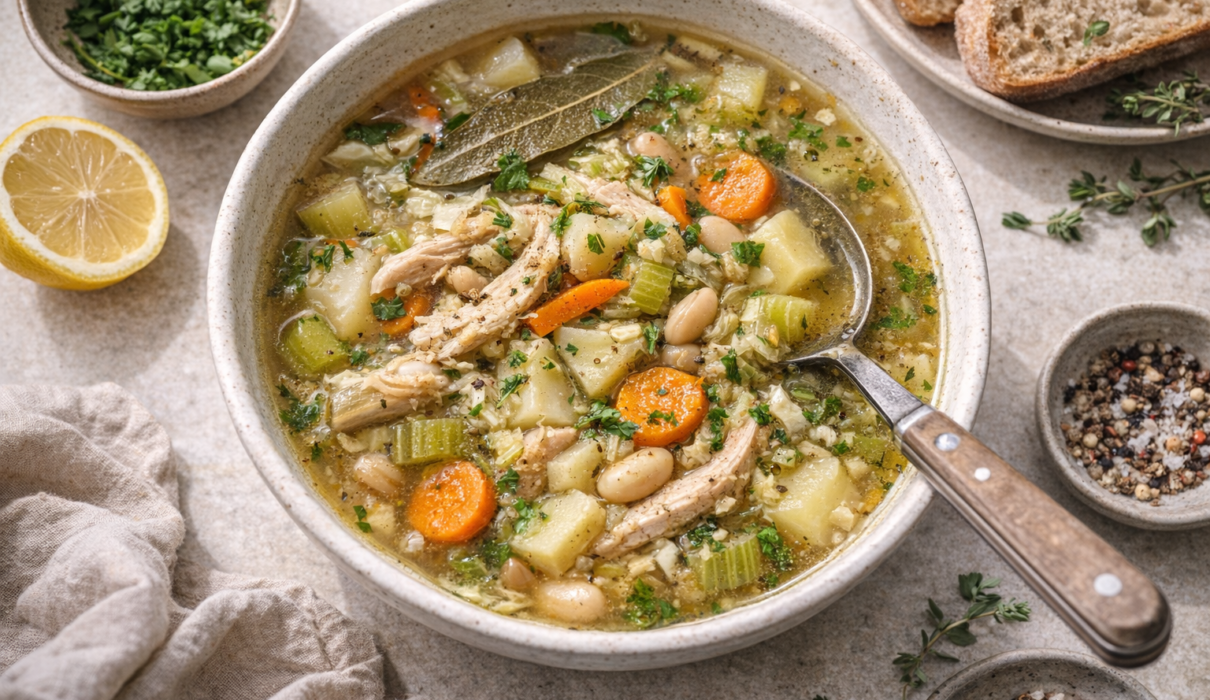
 By
By I used to think vegan soups were boring.
Too watery.
Too bland.
Too dependent on cream substitutes.
Every recipe promised “rich and hearty”
and most of them tasted like boiled vegetables with ambition.
Either they lacked depth
or they were overloaded with spices
or they tried too hard to imitate meat-based broths.
And if you’ve ever spent 40 minutes chopping vegetables
only to end up with a flat-tasting pot of soup
you know how disappointing that feels.
This fixes that.
These vegan soups are balanced, layered, and actually satisfying.
Not watery.
Not heavy.
Not complicated.
And they don’t rely on cream, butter, or fake flavor enhancers.
Just technique.
And about 30 minutes.
What Vegan Soups Actually Are
Good soup isn’t about ingredients.
It’s about building flavor in layers.
Classic soups start with fat, aromatics, vegetables, liquid, and time.
Vegan versions follow the exact same structure.
The difference?
You rely on:
- Slow-cooked onions for sweetness
- Garlic for depth
- Vegetable broth for body
- Beans or lentils for structure
- Acid at the end for balance
Most recipes skip one of these.
That’s why they taste unfinished.
A good vegan soup should feel complete on its own.
Not like it needs cheese on top to survive.
Why These Vegan Soups Work
Balanced seasoning. Not flat. Not salty.
Proper simmering. Not aggressive boiling.
Texture contrast. Not mush.
Protein from legumes so it’s actually filling
Depth without cream or coconut
They behave like real soups.
Which is the entire point.
Ingredients You’ll Need (Base Template)
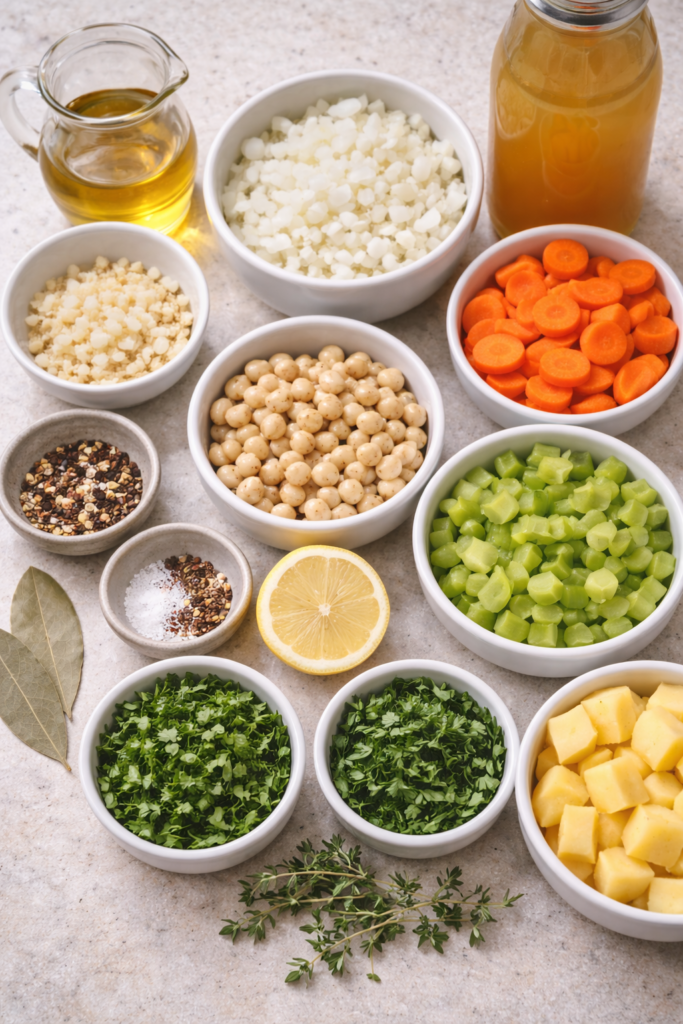
This makes about 4 servings.
- Olive oil – 2 tablespoons
- Onion – 1 medium, diced
- Garlic – 3 cloves
- Carrots – 2, sliced
- Celery – 2 stalks
- Potatoes or beans – 1 to 2 cups
- Vegetable broth – 4 to 5 cups
- Salt – to taste
- Black pepper – to taste
Optional but powerful:
- Bay leaf
- Fresh herbs
- Lemon juice or vinegar
No cream.
No complicated substitutes.
Fat and time matter more.
How To Make Vegan Soups Properly
Start with olive oil in a pot over medium heat.
Add onion and cook slowly.
Do not rush this part.
Let it soften and turn slightly golden.
That’s your sweetness base.
Add garlic and stir for 30 seconds.
Add carrots and celery. Let them cook briefly before adding liquid.
Pour in vegetable broth.
Bring to a boil, then immediately lower to a steady simmer.
Not aggressive.
Simmer for 20–30 minutes.
If using beans, add them halfway through.
If using delicate greens, add them at the end.
Finish with salt, pepper, and a squeeze of acid.
That last step changes everything.
Texture Control (Important)
Soup thickens as it cools.
For lighter broth soups
use more liquid and fewer starches.
For hearty soups
blend 1 cup of the soup and stir it back in.
For creamy soups
blend fully, but leave a little texture.
If it looks flat
it probably needs salt.
If it tastes heavy
it needs acid.
Even traditional soups follow this rule.
Flavor Variations
Save
- Lentil and cumin
- Tomato and white bean
- Mushroom and barley
- Chickpea and spinach
- Potato and leek (blended)
Same base technique.
Different direction.
That’s the beauty of vegan soups.
How I Actually Use These Soups
Weeknight dinners
Meal prep for 3–4 days
Freezer backups
Cold weather comfort
Light lunches with bread
They stretch ingredients.
They improve overnight.
They require nothing fancy.
Common Mistakes To Avoid
- Boiling instead of simmering
- Under-salting
- Skipping fat entirely
- Adding everything at once
- Over-blending into paste
Soup rewards patience.
Storage (Important)
Store in an airtight container in the fridge (3 to 4 days).
Most vegan soups taste better the next day.
Yes, you can freeze them.
Avoid freezing fully blended potato-heavy soups
unless you’re okay blending again after thawing.
Final Thought
Good vegan soups don’t rely on tricks.
They rely on technique.
They aren’t trying to impress.
They’re trying to nourish.
Make one properly
and you’ll stop calling vegan soup boring.
If you want
a high-protein version
a creamy blended series
or a full winter soup collection
Tell me.